Different Types of Foundation Brushes

Ever stood in the makeup aisle completely overwhelmed by the sheer number of foundation brushes staring back at you? Flat, fluffy, angled, stippling... it's a LOT. And if you've ever grabbed one at random, only to end up with streaky, patchy foundation, you know that picking the right brush isn't just a nice to have, it's ESSENTIAL for getting that smooth, flawless base we all crave.
Here's the thing: each foundation brush is designed for a specific purpose. Some give you full coverage in seconds, others are all about that sheer, barely-there glow. Some work like magic with liquid formulas, while others are meant for cream or even powder foundations. Knowing the difference can completely change your makeup game and, honestly, save you a ton of frustration (and wasted product).
In this guide, we'll break down all the major types of foundation brushes, what they're best for, how to use them, and the pros and cons of each. Whether you're a total beginner building your first brush collection or a seasoned pro looking to expand your kit, this is everything you need to know to find your perfect match.
Let's dive in.
What Makes a Good Foundation Brush?
Before we get into specific brush types, let's talk about what actually makes a foundation brush worth buying. Because not all brushes are created equal, and understanding the basics will help you spot quality when you see it.
First up: bristle quality. You want bristles that are soft enough to feel comfortable on your skin, but dense enough to actually pick up and distribute product evenly. Synthetic fibres like Taklon are ideal for liquid and cream foundations because they don't absorb as much product, meaning less waste and a smoother application. Plus, they're easier to clean and are almost always vegan and cruelty-free, which is always a win.
Next, think about shape and density. These two factors determine how your brush will actually perform. A densely packed brush buffs foundation into the skin for fuller coverage, while a looser, fluffier brush gives you a lighter, more diffused finish. Shape matters too: flat brushes give you precision, rounded brushes help with blending, and angled brushes fit perfectly into the contours of your face.
Finally, don't overlook handle and ferrule construction. A comfortable, ergonomic handle makes application easier (especially for those detailed areas around the nose and eyes), and a well-secured ferrule means your brush won't shed bristles mid-application or fall apart after a few washes. Quality construction = a brush that lasts.
Flat Foundation Brushes
Flat foundation brushes are exactly what they sound like: brushes with a flat, paddle-like shape and densely packed bristles. They're one of the most traditional foundation brush styles and have been a staple in makeup kits for years.

Best for & how to use
Flat brushes are fantastic for liquid foundations, especially if you want buildable, controlled coverage. Their shape allows you to apply foundation in thin, even layers, which is perfect for anyone who prefers a more natural, skin-like finish rather than heavy, full coverage.
To use a flat brush, dot your foundation onto your face (forehead, cheeks, nose, chin), then use the brush to paint the product outward in smooth, downward strokes. You can also use short, pressing motions to stipple and blend for a more seamless finish. The key is to work in sections and blend as you go.
Pros & cons
Pros: Great for precision application, especially around the nose and under the eyes. Offers buildable coverage without looking heavy. Works well with most liquid and cream formulas.
Cons: Can leave streak marks if you're not careful with your technique. Not the best choice if you're looking for a super quick, “one and done” application. Requires more blending effort compared to other brush styles.
Stippling Brushes

Stippling brushes, also known as duo-fiber brushes, are those eye catching tools with two different lengths of bristles, usually a mix of dense, shorter bristles at the base and longer, wispy fibres at the tips. This unique design creates an airbrush-like effect that's hard to replicate with other brush types.
Best for & how to use
If you're after that flawless, natural glow that looks like your skin but better, stippling brushes are your best friend. They're amazing for sheer to medium coverage and work beautifully with liquid, cream, and even mousse formulas. The longer fibres pick up just a small amount of product, which means you're layering on light, buildable coverage rather than heavy, cakey layers.
To use a stippling brush, apply a small amount of foundation to the back of your hand, lightly dip the tips of the brush into the product, and then use a stippling (up and down tapping) motion to apply it to your face. Avoid swirling or buffing, which can disrupt the airbrush effect. Work from the centre of your face outward for the most natural-looking results.
Pros & cons
Pros: Creates a beautiful, airbrushed finish. Perfect for sheer, natural coverage. Blends seamlessly without harsh lines. Great for mixing foundations or applying tinted moisturisers.
Cons: Not ideal if you need full coverage quickly. The technique takes a bit of practice to master. Can be harder to clean due to the dual-fibre construction.
Buffing Brushes
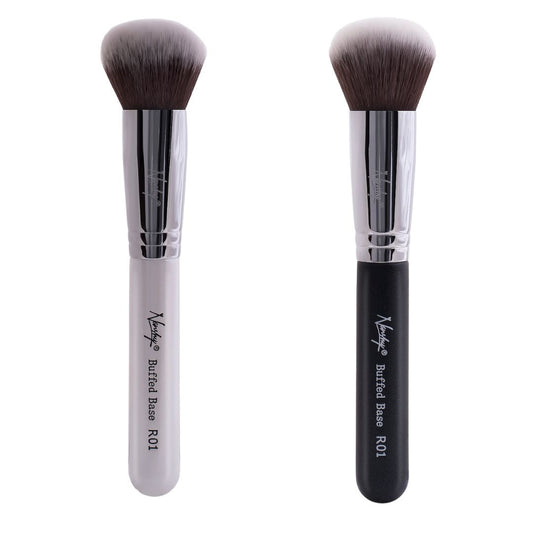
Buffing brushes are typically round, dome-shaped brushes with densely packed bristles designed for, you guessed it, buffing. They're built to work product into the skin using circular motions, creating a blended, polished finish that looks incredibly smooth.

Best for & how to use
Buffing brushes are absolute workhorses for anyone who wants a flawless, full-coverage foundation look without spending ages blending. They're especially fantastic with liquid and cream foundations, though they can work with mineral powders too. The circular buffing motion helps foundation melt into the skin, minimising the appearance of pores and imperfections.
To use, apply foundation to your face (or onto the brush directly), then use small, circular buffing motions to blend the product into your skin. Start from the centre of your face and work outward. Keep the pressure light to avoid pushing the foundation around rather than blending it in.
Pros & cons
Pros: Gives a seamless, airbrushed finish. Perfect for full coverage without looking heavy. Quick and efficient, great for busy mornings. Versatile enough to use with multiple formulas.
Cons: Dense bristles can absorb more product than flatter brushes. Needs regular cleaning to prevent product buildup. Can take longer to dry after washing due to bristle density.
Kabuki Brushes
Kabuki brushes are those adorable, short-handled brushes with big, fluffy, dense heads. Originally designed for applying powder, they've become incredibly popular for foundation application too, especially for anyone who loves that buffed, soft-focus finish.
Best for & how to use
Kabuki brushes are versatile, they work beautifully with powder foundations, mineral makeup, and even liquid and cream foundations when you're going for medium to full coverage. Their dense bristle head allows for quick application across large areas of the face, making them a favourite for anyone who wants efficiency without sacrificing quality.
To use a kabuki brush with liquid foundation, dot your foundation onto your face and buff it in using circular or back and forth motions. For powder foundations, swirl the brush in the product, tap off the excess, and buff it onto your skin in circular motions.
Pros & cons
Pros: Quick and efficient for covering large areas. Creates a beautifully blended, soft finish. Works with multiple foundation types. Often compact and travel-friendly.
Cons: Short handles can make precision work around the eyes and nose tricky. May not be the best choice for super detailed application. Dense heads can take longer to dry after cleaning.
Angled Foundation Brushes
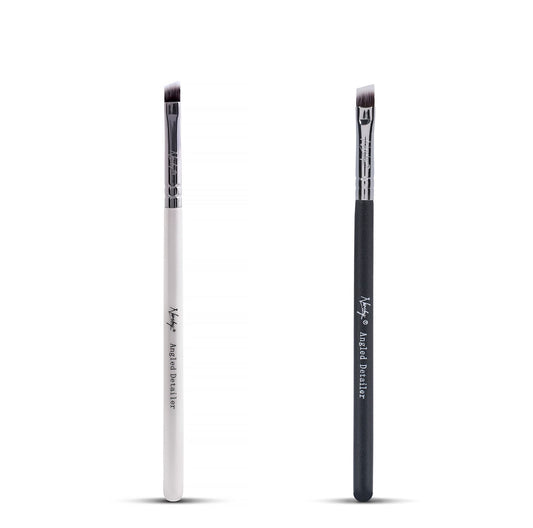
Angled foundation brushes have a slanted brush head that makes them perfect for getting into all those tricky areas of your face, think around the nose, along the jawline, and under the eyes. They're precision tools disguised as everyday brushes.

Best for & how to use
If you want full, even coverage without missing any spots, an angled brush is a great choice. The slant naturally hugs the contours of your face, making it easy to blend foundation seamlessly into areas that other brushes might struggle to reach. They're particularly good for liquid and cream foundations.
To use, dip the flat edge of the brush into your foundation and apply using short, sweeping strokes. The angle helps you follow the natural curves of your face, so let the brush do the work. You can also use a gentle buffing motion to blend everything together for a smooth finish.
Pros & cons
Pros: Excellent for reaching tight areas. Offers precise, controlled application. Follows the natural contours of the face. Great for building coverage where you need it most.
Cons: May require a second brush for full-face blending. Takes some practice to get used to the angled head. Not as fast as larger buffing or kabuki brushes.
Paddle Foundation Brushes
Paddle brushes are flat, wide brushes with a rounded or slightly tapered edge. They look a bit like a painter's brush and are designed for smooth, sweeping application of liquid or cream foundation.
Best for & how to use
Paddle brushes are fantastic for laying down an even base quickly. They're often used by professional makeup artists because they offer great control and allow you to build coverage precisely where you need it. They work best with liquid and cream formulas.
To use, load the brush with foundation and sweep it onto your face using long, smooth strokes, almost like you're painting. Start from the centre of your face and blend outward. You can follow up with stippling or buffing motions to ensure everything is seamlessly blended.
Pros & cons
Pros: Smooth, even application with minimal streaking. Offers great control for buildable coverage. Works well for both everyday and professional use.
Cons: May require additional blending with a sponge or second brush. Not ideal for powder formulas. Technique matters, streaks can happen if you rush.
Tapered Foundation Brushes
Tapered foundation brushes have a pointed or slightly rounded tip that narrows at the top. This shape makes them incredibly versatile, perfect for both broad application and precise detail work.

Best for & how to use
Tapered brushes are brilliant for applying foundation where you need it most while also being gentle enough for delicate areas like under the eyes and around the nose. They're a great all-rounder for beginners who want one brush that can do it all.
To use, apply foundation to the brush or directly onto your face, then blend using circular or stippling motions. The tapered tip allows you to get into tight spots easily, while the broader base covers larger areas efficiently.
Pros & cons
Pros: Versatile, works for full face and detail work. Great for blending concealer and foundation together. Soft, rounded shape is gentle on skin.
Cons: May not offer as much full-coverage power as denser buffing brushes. Can take longer to cover large areas compared to kabuki or flat top brushes.
Our Top Foundation Brush Recommendations
Now that you know what each brush type does, let's talk about some actual brushes worth adding to your kit. Here are our top picks.

1. Nanshy Flawless Foundation Brush
This vegan makeup brush features densely packed, soft synthetic Taklon bristles that minimise product absorption and waste. It's designed with a robust, engraved brass ferrule for durability and an ergonomic handle for easy use. Suitable for liquid, powder, and cream foundations, this brush offers buildable coverage and a smooth, flawless finish. If you're looking for a workhorse brush that performs beautifully every single time, this is it.
2. Real Techniques Expert Face Brush
The Real Techniques Expert Face Brush is a cult favourite, designed with ultra-plush synthetic bristles that pick up and apply foundation with minimal streaking. It works wonderfully with liquid, cream, or powder formulas and its large, domed shape is made for buffing and blending to create even coverage. Created in collaboration with YouTube makeup artists Sam & Nic Chapman, this brush combines cruelty-free technology with artistic innovation. It's popular among makeup artists for its versatility, affordability, and seamless blending capabilities.
3. Sigma F80 Flat Kabuki Brush
The Sigma F80 features densely packed synthetic Sigmax fibres in a flat-top shape, delivering full coverage with a natural finish. The brush's firmness helps to buff foundation into the skin without streaks, making it ideal for liquid and cream foundations. It's a cult favourite for professionals and enthusiasts alike, praised for its high-quality synthetic fibres, effective application, and impressive durability. If you want that airbrushed look, the F80 delivers.
4. e.l.f. Cosmetics Ultimate Blending Brush
A budget-friendly option that doesn't skimp on quality, the e.l.f. Ultimate Blending Brush has densely packed synthetic bristles designed for smooth application of liquid and cream foundation. Its large, dome-shaped head allows for seamless blending, while the tapered shape helps with detailed areas like around the nose and under the eyes. This brush proves you don't need to spend a fortune to get professional results.
5. IT Cosmetics Heavenly Luxe Complexion Perfection Brush
This dual-ended brush is all about versatility. Constructed with ultra-soft synthetic bristles arranged in a densely packed, dome shape on one end and a smaller concealer brush on the other, it offers full coverage and a flawless finish. It works effectively with all foundation types, including liquids, creams, and powders. Developed with plastic surgeons, this brush is favoured for its luxurious softness and professional quality, delivering an airbrushed finish while being gentle enough for sensitive skin.
How to Choose the Right Foundation Brush for Your Skin Type
Finding the right foundation brush isn't just about the brush itself, it's also about understanding your skin. Different skin types benefit from different application techniques.
Oily Skin: If you have oily skin, look for brushes with densely packed bristles like buffing or flat kabuki brushes. These help press foundation into the skin for longer-lasting wear. Avoid overly fluffy brushes that might not give you enough coverage or control.
Dry Skin: For dry skin, softer, fluffier brushes like stippling or tapered brushes work best. They apply foundation more lightly, which helps avoid clinging to dry patches. Pairing your brush with a hydrating primer and foundation will give you the best results.
Combination Skin: You might benefit from using different brushes for different zones, a denser brush for your T-zone and a softer brush for your cheeks. Tapered brushes are also a great all in one option.
Sensitive Skin: Soft, synthetic bristles are your best friend. Look for brushes labelled as hypoallergenic or made specifically for sensitive skin. Avoid anything scratchy or stiff.
Brush Material: Vegan vs Natural Hair for Foundation
When it comes to foundation brushes, the bristle material matters.
Synthetic Bristles (Taklon, Nylon): These are the go-to for liquid and cream foundations. They're non-porous, meaning they don't absorb as much product, making them more efficient and hygienic. They're also easier to clean, dry faster, and are almost always vegan and cruelty-free.
Natural Hair Bristles: Traditional natural hair brushes are excellent for powder products because their cuticles grip and hold pigment well. However, they absorb more liquid, making them less ideal for liquid foundations. They also require more delicate care and aren't vegan.
For most foundation applications, high-quality synthetic brushes outperform natural hair while being more ethical and easier to maintain.
Common Mistakes When Using Foundation Brushes
Even the best brush can let you down if you're making these common mistakes.
Using the wrong brush for your formula. A fluffy powder brush won't give you great results with liquid foundation, and a dense buffing brush might be overkill for a sheer tinted moisturiser. Match your brush to your product.
Applying too much product at once. It's easier to build coverage than to remove excess. Start with a small amount, blend, and add more if needed.
Pressing too hard. Let the bristles do the work. Pressing too hard moves product around instead of blending it in and can cause streaking.
Not cleaning your brush regularly. Dirty brushes don't perform well, and they can harbour bacteria that leads to breakouts. Clean your brushes weekly for best results.
Ignoring brush shape for your face. If you're struggling to blend around your nose or eyes, you might need an angled or tapered brush rather than a large kabuki.
How to Clean & Maintain Your Foundation Brushes
Taking care of your brushes isn't just about hygiene, it's about making them last and keeping them performing at their best.
Weekly deep clean: Use a gentle brush cleanser or baby shampoo. Wet the bristles (not the ferrule), swirl in the cleanser, rinse until the water runs clear, and reshape the bristles. Lay flat to dry with the bristles hanging over the edge of a surface to prevent water from seeping into the ferrule.
Spot clean between uses: Use a quick-dry brush spray to remove product buildup between deep cleans. This keeps your colours true and your application smooth.
Proper storage: Store brushes upright in a container or in a protective case to keep bristles from getting crushed. Avoid humid environments like the bathroom if possible.
Know when to replace: Even well cared for brushes don't last forever. If your brush is shedding, fraying, or just doesn't blend like it used to, it might be time to retire it.
Common Mistakes When Using Foundation Brushes
Choosing the right foundation brush makes a bigger difference than most people realise, and now you know exactly how each type performs. Whether you want sheer, natural coverage or a full, airbrushed finish, there’s a brush built for that purpose. Pay attention to bristle quality, shape, and how well the brush suits your skin and formulas. With the right tool and proper maintenance, achieving a flawless base becomes effortless every time!
FAQs About Foundation Brushes
1. What's the best foundation brush for beginners?
A tapered or buffing brush is a great starting point for beginners because they're versatile and forgiving. They work with most formulas and don't require super precise technique to get good results.
2. Can you use the same brush for liquid and powder foundation?
You can, but it's not ideal. Liquid formulas can leave residue that affects powder application, and vice versa. If you use both types of foundation regularly, it's worth having separate brushes, or at least cleaning thoroughly between uses.
3. How often should you replace your foundation brush?
With proper care, a high-quality brush can last several years. However, if you notice significant shedding, fraying bristles, or a decline in performance, it's time for a new one. Most brushes start showing wear after 1–3 years of daily use.
4. Do you need different brushes for different foundation formulas?
While you can get away with one good all-rounder, having a couple of different brushes definitely helps. Dense, synthetic brushes are best for liquid and cream, while fluffier options work better for powder or sheer formulas.
5. Should you wet your foundation brush before use?
It depends on the look you want. Dampening your brush can help thin out foundation for a dewier, more natural finish. A dry brush gives fuller, more matte coverage. Experiment to see what works best for you.
6. Why does my foundation look streaky with a brush?
Streaking usually happens when there's too much product on the brush, you're pressing too hard, or the brush isn't suited to your foundation formula. Try using less product, lighter pressure, and a blending technique that matches your brush type.
7. Are expensive foundation brushes worth it?
Not always! There are plenty of affordable brushes that perform just as well as high-end options. What matters most is bristle quality, construction, and how well the brush suits your needs. That said, investing in a few quality brushes can make a real difference in your results and their longevity.