Bristle Structures And Taklon

For decades, the beauty industry treated animal hair as the gold standard for makeup brushes. Squirrel for powder. Badger for blending. Pony for everything else. The logic made sense at the time, natural bristles had a texture that gripped pigment, and synthetic alternatives couldn't match them.
But those days are gone.
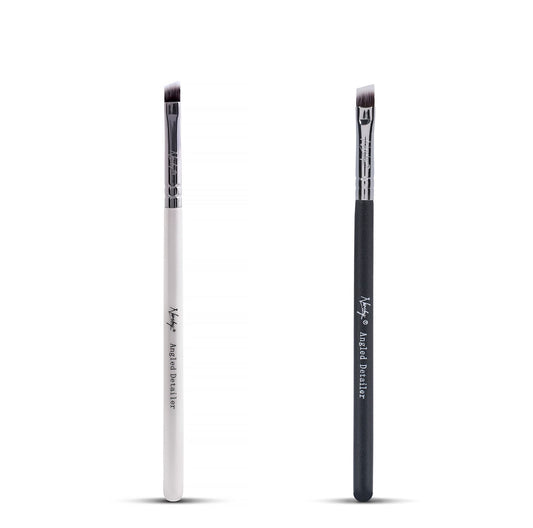
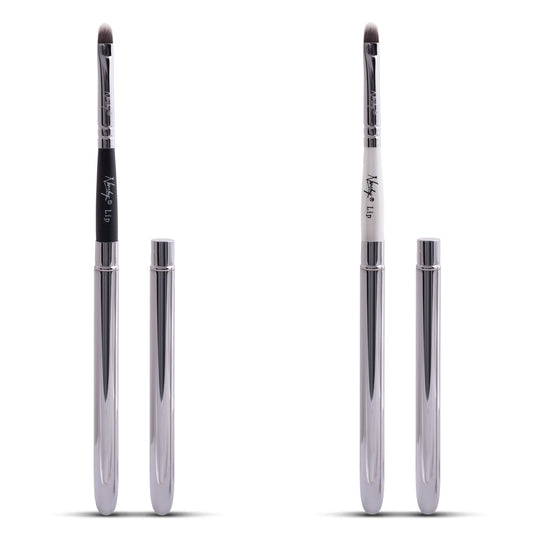
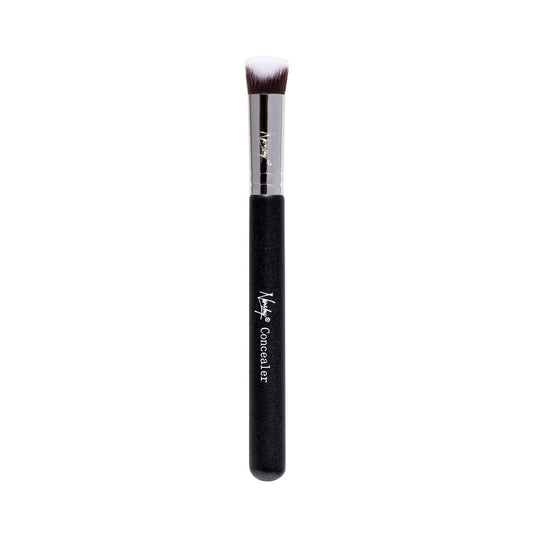
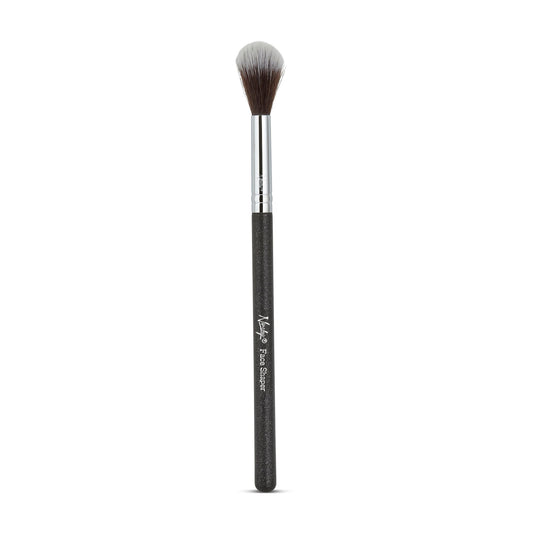
The synthetic fibres available today, and the premium Taklon used in every Nanshy brush, aren't a compromise on natural hair. They're a technical advancement beyond it. Better product delivery, better hygiene, longer lifespan, and a supply chain that doesn't require looking the other way.
The debate isn't really a debate anymore. Here's the science that explains why.
Natural Animal Hair Bristles
Animal hair - from goats, squirrels, badgers, ponies - has a naturally porous, scaly outer layer called a cuticle. That texture does a decent job of gripping powder. But it also means the bristle absorbs liquid and cream products like a sponge, wasting product and making application uneven.
Advanced Synthetic Bristles (The Nanshy Standard)

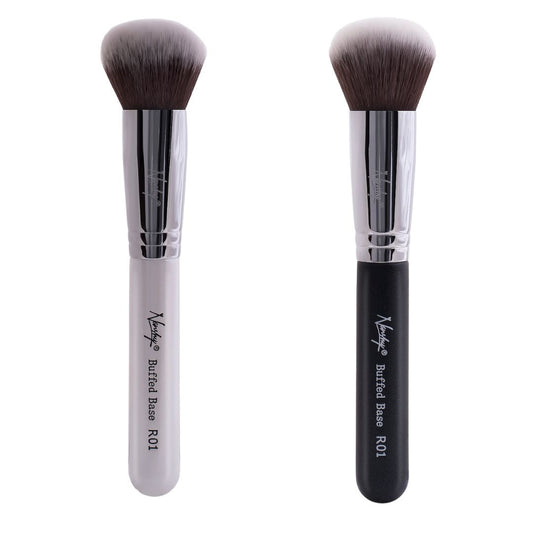
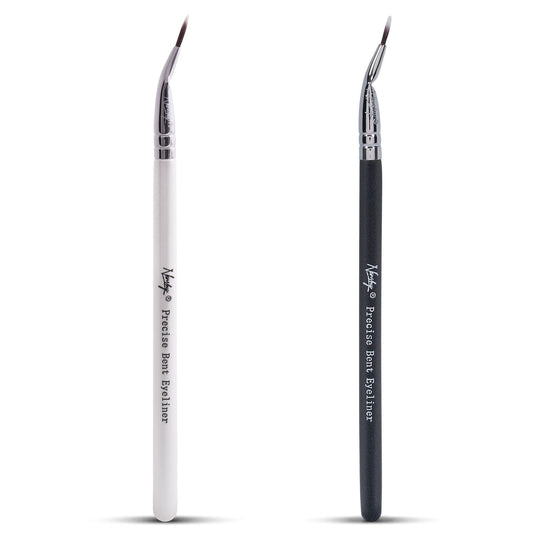
Nanshy brushes use premium Taklon - a man-made polyester fibre with a smooth, non-porous surface. Because it doesn't absorb too much, product goes where you want it -That was then on your skin, not into the brush. And because synthetic fibres are manufactured to exact specifications, diameter and density can be tuned for each brush type in a way that's simply impossible with animal hair.
Performance Across All Makeup Formulas
Application with Liquids & Creams
This is where the gap is biggest. Animal hair absorbs foundation, concealer, and cream blush - you end up using more product and getting streakier results. Taklon bristles lay product down smoothly and evenly without absorbing any of it. It's why professional makeup artists moved to synthetic brushes for liquids a long time ago.
Application with Powders
The old myth that natural hair is better for powders doesn't hold up anymore. High-density synthetic bristles pick up powder just as effectively and distribute it more evenly, with better fallout control. The difference is precision - you get more of it with synthetic.
The Unseen Advantages of Synthetic Bristles
1. Superior Hygiene and Skin Health
Porous bristles trap bacteria. Product residue, skin oils, and dead cells embed deep into the cuticle structure of animal hair - well beyond what a surface clean can reach. That buildup gets redeposited on your skin every time you use the brush. Taklon bristles are non-porous and hypoallergenic, so contamination sits on the surface and rinses away completely. For sensitive or acne-prone skin, this isn't a minor point.
2. Unmatched Durability and Longevity
Natural hair degrades. Repeated washing dries out the cuticle, bristles shed, and the brush shape warps over time. Taklon holds its form wash after wash without shedding or losing softness. Paired with nickel-plated brass ferrules and sustainable beechwood handles, a Nanshy brush is built to last years, not months.
3. The Uncompromising Ethical Standard
"Natural hair" is animal hair - and its supply chain is rarely transparent. Squirrel, badger, and pony hair come from farms and sourcing conditions that animal welfare organisations have repeatedly flagged. There's no reliable third-party certification for cruelty-free natural brush hair. The only way to guarantee your tools are cruelty-free is to choose synthetic. As a PETA-certified, 100% vegan brand, that's not a compromise we're willing to make. And Nanshy is proudly one of them.
Science & Technical
How Bristle Density Affects Pigment Payoff
More fibres packed into the ferrule means more contact with skin per stroke - which means more even pigment deposit and richer colour payoff. Because Taklon fibres can be manufactured to consistent diameters, we can achieve higher densities than animal hair, where strand thickness varies by animal, season, and source.
The Role of Fibre Diameter in Softness and Precision

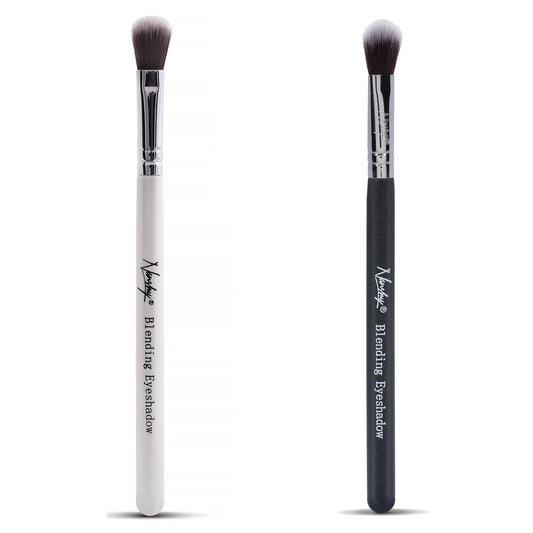
Finer fibres feel softer and blend more diffusely - ideal for eyeshadow blending and buffing. Thicker fibres hold their shape under pressure - better for precise liner or contour work. With synthetic manufacturing, we can set the exact diameter for each brush. With natural hair, you get whatever the animal grew.
How Temperature and Humidity Affect Bristle Performance
Animal hair is hygroscopic - it absorbs atmospheric moisture. A natural hair brush performs differently in a humid bathroom than in a dry climate. Taklon is dimensionally stable and doesn't absorb moisture, so performance stays consistent regardless of environment.
The Chemistry of Brush Cleaning and Why Synthetic Wins Again
Natural hair needs gentle cleansers to avoid stripping the cuticle, but gentle cleansers often leave residue behind. Too harsh, and you accelerate shedding. Taklon has no such balance to strike - its non-porous surface means product rinses off completely with minimal effort. Clean them daily if you want. The bristles won't suffer.
Practical & How-To
How to Tell Real Synthetic Quality from Cheap Imitations
Not all synthetic brushes are equal. Here's what separates quality from an imitation:
-
Fibre uniformity: Bristles should look and feel consistent across the whole brush head. Visible variation in length or thickness means poor manufacturing.
-
Softness with body: A quality brush is soft on contact but holds its shape under pressure. If bristles collapse flat immediately, the density or fibre diameter is wrong.
-
Ferrule construction: Seamless, firmly attached, no visible glue or rough crimp lines.
-
Shedding test: Swipe across the back of your hand. One fibre on a brand-new brush is fine. More than that means weak bonding.
How Often Should You Actually Clean Your Brushes?
-
Liquid and cream formulas: After every use. Product left on bristles overnight is a bacterial growth opportunity.
-
Powder formulas: Thorough clean weekly minimum. Quick dry-clean between colour switches.
-
Spot cleaning: A brush cleanser spray takes 30 seconds and prevents cross-contamination between shades.
Because Taklon dries in 1–2 hours laid flat, there's no real excuse to skip cleaning.
Signs Your Brushes Need Replacing (And How to Extend Their Life)
Watch for these:
-
Persistent shedding after the first few uses
-
Splaying that doesn't recover after washing
-
Discolouration that won't wash out
-
Smell that survives a proper clean
To extend lifespan: reshape bristles before laying flat to dry, store upright or rolled (never bristles-down), and don't soak the ferrule - water weakens the adhesive bond over time.
Skin & Health
The Hidden Link Between Dirty Brushes and Breakouts
Every time you use a brush, it picks up skin oils, dead cells, and product residue. Left in porous bristles, that mixture becomes a growth medium for gross bacteria, and fungi - which you then reapply to your face on the next use. The porous cuticle structure of animal hair makes this a lot worse. Synthetic bristles hold it at the surface where it washes away completely.
Why Synthetic Brushes Are Better for Sensitive and Reactive Skin
Animal hair creates two problems for sensitive skin. Physically, the rough, scaled cuticle structure causes micro-abrasion - imperceptible on most skin, but measurable on reactive types and enough to disrupt the skin barrier over time. Chemically, animal hair carries proteins and dander that can trigger contact dermatitis. These allergens can't be washed out because they're in the material.
Taklon is something called an “inert polymer”, which means no allergens, no micro-abrasion. For anyone managing rosacea, eczema, or general sensitivity, it's a straightforward upgrade.
Allergens in Natural Hair Brushes and What Brands Don't Tell You
Natural hair brushes contain animal-derived proteins - the same class of compounds behind common allergic reactions. For people with known animal hair or dander allergies, this is a direct risk. For everyone else, it's an unnecessary variable. There's no performance reason to accept it when synthetic alternatives match or exceed natural hair on every application metric.
The Ethics & Makeup Industry
The Dark Side of "Natural"
As of 2024-2026, much of squirrel hair - used in high-end powder brushes - comes from Siberian and Korean squirrels under conditions that animal welfare organisations have flagged repeatedly. Badger hair comes predominantly from farms in China where conditions are largely unregulated. The industry uses phrases like "ethically sourced natural bristles" as marketing positions, not verified standards. No credible third-party certification exists for brush hair sourcing. The only guaranteed cruelty-free bristle is one with no animal material in it.
What PETA Certification Actually Means for Your Brush
PETA's Beauty Without Bunnies programme requires two things: no animal testing at any stage, and no animal-derived ingredients or materials. For Nanshy, this covers every Taklon fibre, every handle material, and every adhesive in every brush. It's not a badge we added to packaging, it's a constraint that shaped every product decision.
The Rise of Vegan Beauty

The shift from natural to synthetic isn't just cultural - it's technical. The performance gap that once justified animal hair for powder application has been closed by advances in engineering. Younger consumers increasingly treat cruelty-free status as a baseline, not a premium. Brands that resisted the move to synthetic are now playing catch-up. The argument for animal hair has run out of road.
Consumer / Buying Guide
What to Look for When Buying a Brush Set
-
Bristle material: Explicitly identified as synthetic Taklon or equivalent. "Soft fibres" or "premium hair" without specifics are red flags.
-
Ferrule: Seamless, nickel-plated brass. Resists corrosion, holds the bristle bundle securely.
-
Handle: Hardwood or quality resin. Lightweight plastic reduces tactile control.
-
Set coverage: Foundation, powder, blush/contour, eyeshadow blending, eyeshadow packing, liner - at minimum.
-
Brand transparency: Do they name their materials and show their certifications? Opacity is a warning sign.
Hint: We have an article just for this if you’re looking for a more in-depth guide.
Why Cheap Synthetic Brushes Fail (And What Separates Premium Taklon)
Budget synthetics cut corners in three places:
Fibre quality: Low-grade nylon with inconsistent diameter produces a scratchy, drag-heavy feel that irritates skin and applies product unevenly.
Density: Fewer fibres means patchy application and faster wear as individual bristles bear more load.
Ferrule bonding: Weak crimping lets fibres loosen and shed after a handful of washes.
Quick Cost Breakdown
Here's the thing nobody mentions when they're proud of a £5 brush find: they'll be buying it again in a couple months.
Budget brushes cut corners in the places that determine lifespan - fibre quality, ferrule bonding, bristle density. The result is a brush that performs “meh” out of the packaging and deteriorates steadily from there. Shedding starts within the first few washes. The shape doesn't recover after cleaning. Bristles that were soft on day one turn scratchy as the low-grade fibres break down. Within a month or so, it's in the bin. Multiply that across a full set, bought and replaced two or three times a year at least, and the number adds up faster than it looks on a per-brush basis.
And that's only counting what you paid for the brushes themselves. Porous bristles - whether animal hair or cheap nylon - absorb product on every use. Foundation, concealer, cream contour, a meaningful percentage of what you apply to the brush never makes it to your skin. It gets trapped in the fibres, sits there between uses, and eventually gets discarded along with the brush. For anyone using mid-range to premium skincare and makeup, that absorption represents a real ongoing cost - one that's invisible because it never shows up as a line item anywhere.
A quality brush changes both sides of that calculation. Premium Taklon fibres are non-porous, so product absorption drops to essentially zero - everything you load onto the brush reaches your face. And because the fibre quality, ferrule bonding, and handle construction are engineered to last, the brush holds its shape, softness, and performance for years rather than months. The cost per use ends up significantly lower than the budget alternative, even before the product savings enter the equation.
There's also the compounding performance difference to consider. A brush that maintains its shape applies product way better, more evenly, and with less effort. You're not compensating for splayed bristles or uneven density. Your technique works the way it's supposed to. The results are better, which means less going back over areas, less product used correcting mistakes, less time in front of the mirror.
Cheap brushes aren't a saving. They're a recurring expense that quietly costs more than the alternative - in replacements, in wasted product, and let’s be honest… In headaches & stress too.
The Verdict - Science and Ethics Point to Synthetic
Better with liquids. Better with creams. Matched or better with powders. More hygienic. More durable. Genuinely cruelty-free.
The old argument for animal hair was performance. That argument doesn't hold anymore. The only thing natural hair has left is tradition - and that's not a good enough reason.
Ready to make the switch? Explore our full range of professional, 100% vegan and cruelty-free brushes and feel the difference for yourself.